Views: 0 Author: Site Editor Publish Time: 2025-11-11 Origin: Site


If you work a desk job, you likely spend more time in your office chair than you do in your bed. Despite this, many of us put more thought into our mattress purchase than our choice of office seating. A standard, non-adjustable chair might seem fine initially, but over time it can contribute to back pain, poor posture, and decreased productivity. An ergonomic office chair is an investment in your health and well-being.
So, what makes an office chair "ergonomic"? The term ergonomics refers to the science of designing and arranging things people use so that the people and things interact most efficiently and safely. An ergonomic chair is designed to support the human body, considering posture, comfort, support, and health. It’s adjustable to fit the user’s proportions, helping to maintain a natural posture while sitting.
This guide will walk you through the essential features of an ergonomic office chair, explain why they matter, and provide a clear roadmap to help you select the best one for your workspace.
The shift to remote work and long hours at a desk has brought the importance of a proper workspace into sharp focus. The consequences of using a poorly designed chair can range from nagging discomfort to chronic health issues.
A standard chair often forces your body into unnatural positions. You might find yourself slouching to reach the keyboard or perching on the edge of your seat, leading to strain on your spine, neck, and shoulders. This can result in musculoskeletal disorders, which are a leading cause of lost work time.
An ergonomic office chair is designed to prevent these problems. By providing proper support and promoting good posture, it helps reduce the stress on your body. This not only alleviates pain but can also boost your focus and efficiency. When you're not constantly shifting to find a comfortable position, you can dedicate more mental energy to your tasks. Investing in a quality chair is investing in your long-term health and professional performance.
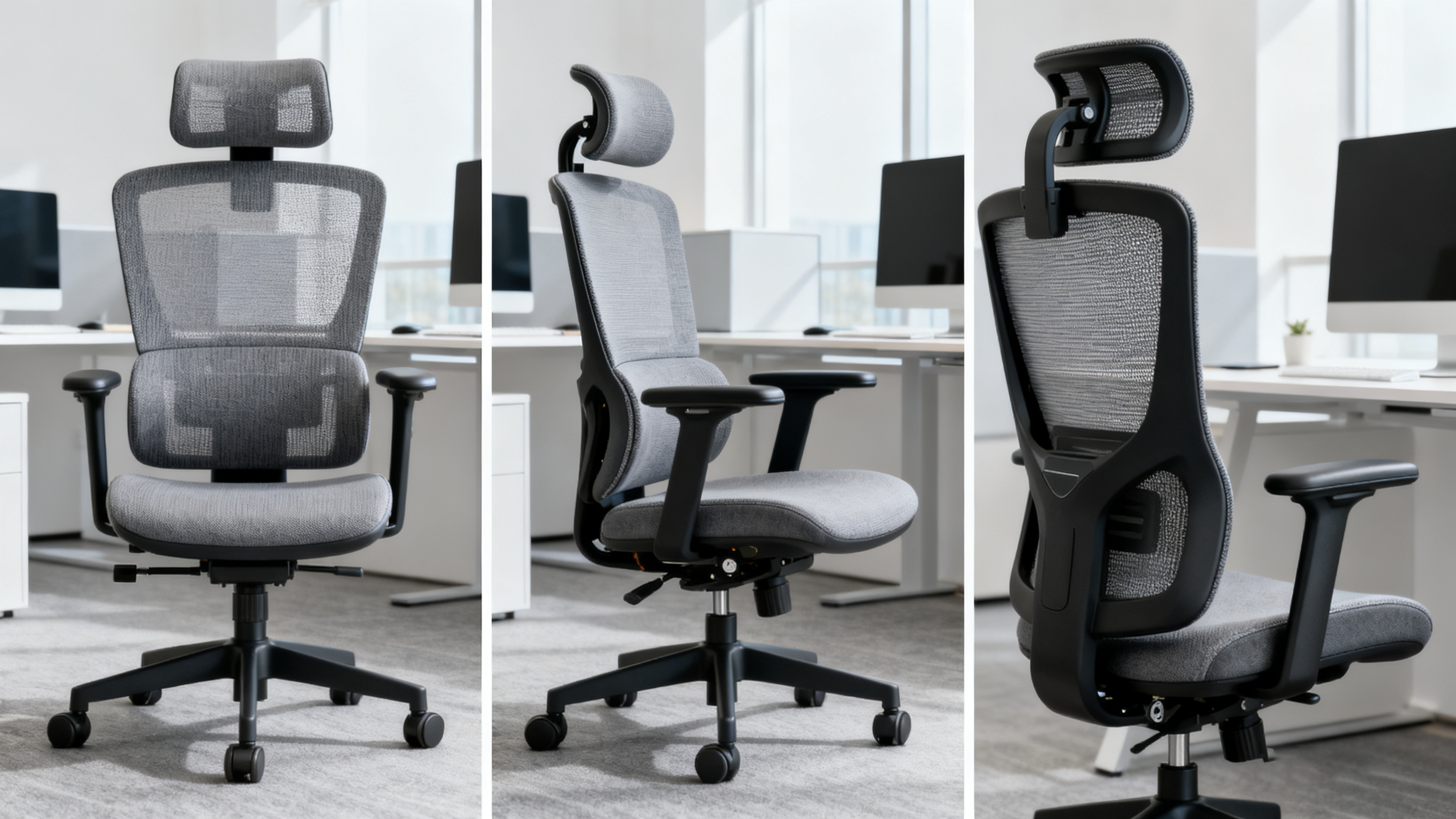
When shopping for an ergonomic office chair, the number of features and adjustments can feel overwhelming. To simplify the process, focus on these key components that have the biggest impact on your comfort and health.
This is the most basic, yet one of the most crucial, features. To find the right height, you should be able to sit with your feet flat on the floor, your knees at a 90-degree angle, and your thighs parallel to the ground. A pneumatic adjustment lever is the easiest way to change the height, allowing you to move the seat up or down with minimal effort. This feature ensures that users of different heights can all use the chair comfortably and maintain a healthy posture relative to their desk.
Your lower back, or lumbar spine, has a natural inward curve. A good ergonomic chair will have lumbar support that helps maintain this curve. Without it, you tend to slouch, which flattens the curve and strains the structures in your lower spine. Look for a chair with adjustable lumbar support, allowing you to change both the height and depth of the support. This customization lets you fit the support perfectly to the curve of your back, providing optimal comfort and reducing the risk of back pain.
The seat of the chair should be wide and deep enough to support you comfortably. The ideal width is at least one inch wider than your hips and thighs on both sides. The depth needs to be adjustable so you can sit with your back against the backrest while leaving about two to four inches between the back of your knees and the front edge of the seat. If the seat is too deep, it can press against your knees and restrict blood flow. If it’s too shallow, it won't provide adequate support for your thighs.
Your backrest should be adjustable in height and angle. It should be wide enough to support the natural curve of your spine. The ability to recline is also important, as it allows you to change your posture throughout the day. Slightly reclining (to about 100-110 degrees) can reduce pressure on your spinal discs. Look for a chair with a locking mechanism that allows you to secure the backrest in different positions, so you're not constantly using your muscles to stay upright.
Armrests help reduce strain on your neck and shoulders. They should be adjustable in height and width. The ideal position is to have your arms resting lightly on them with your shoulders relaxed. If the armrests are too high, they’ll force you to shrug your shoulders. If they’re too low, you’ll lean to one side. Some high-end chairs also offer pivoting armrests, which can be angled inwards for typing or outwards for more space.
An ergonomic chair should rotate easily so you can reach different areas of your desk without straining. The wheels, or casters, should be appropriate for your flooring. Hard casters are best for carpeted floors, while soft casters are designed for hard surfaces like wood or tile. Smooth movement prevents you from twisting and stretching awkwardly, which can lead to injury.


Now that you know what to look for, how do you put it all together to find the right chair?
1.Test It Out: The best way to know if a chair is right for you is to sit in it. If possible, visit showrooms and try out different models. Spend at least 15-20 minutes in each chair, testing the adjustments and seeing how it feels.
2.Read Reviews: Look for reviews from people with similar body types and work habits. They can provide valuable insights into the chair's long-term comfort and durability.
3.Check the Warranty: A good ergonomic chair is an investment, so it should come with a solid warranty. A long warranty period (often 5-10 years or more) is a good indicator of the manufacturer's confidence in their product.
4.Consider Your Budget: Ergonomic chairs range from a few hundred to over a thousand dollars. While it’s tempting to go for the cheapest option, remember that a higher price often reflects better build quality, more adjustments, and greater durability. Think of it as a long-term investment in your health.
Choosing the right ergonomic office chair is a critical step in creating a healthy and productive workspace. It’s about more than just comfort; it’s about supporting your body to prevent pain and long-term health issues.
By focusing on key features like adjustable seat height, lumbar support, and armrests, you can find a chair that fits your body perfectly. Don’t rush the decision. Take the time to research, test, and select a chair that will support you through countless hours of work. Your back, neck, and shoulders will thank you for it, and your productivity will likely see a boost as well.


