Views: 0 Author: Site Editor Publish Time: 2026-01-22 Origin: Site


Your office is more than just a room; it is the command center of your business. The centerpiece of that room—the executive desk—communicates authority, establishes style, and determines how productively you work throughout the day. Choosing the right desk is not merely a purchase; it is an investment in your professional image and daily workflow.
With countless options available, ranging from minimalist glass designs to heavy traditional wood, finding the perfect fit can feel overwhelming. This guide compares top desk styles, features, and materials to help you identify the best executive office desks for your specific business needs.
An executive desk differs from a standard workstation. It is typically larger, offering more surface area for multitasking, meetings, and technology. But beyond functionality, it serves as a focal point.
When a client walks into your office, the furniture speaks before you do. A high-quality executive office desk signals stability and success. For the user, the right desk supports ergonomic health and organizational efficiency. If you are spending eight to ten hours a day at your desk, comfort and utility are just as critical as aesthetics.
The "best" desk is subjective to your brand's identity. Generally, executive furniture falls into two primary categories: modern and traditional.
If your business is in tech, media, or a creative field, a modern office desk often fits best. These designs prioritize clean lines, open space, and mixed materials. You will often see combinations of metal legs with high-gloss tops or sleek veneers.
Modern desks often utilize an "open" design, which makes smaller offices feel larger. They convey that your business is forward-thinking and adaptable.
For law firms, financial institutions, and established corporations, traditional styles remain the gold standard. These desks are often made from rich woods or high-quality MDF veneers. They feature substantial silhouettes, modesty panels (the board at the front of the desk that hides your legs), and intricate detailing. They project permanence and reliability.
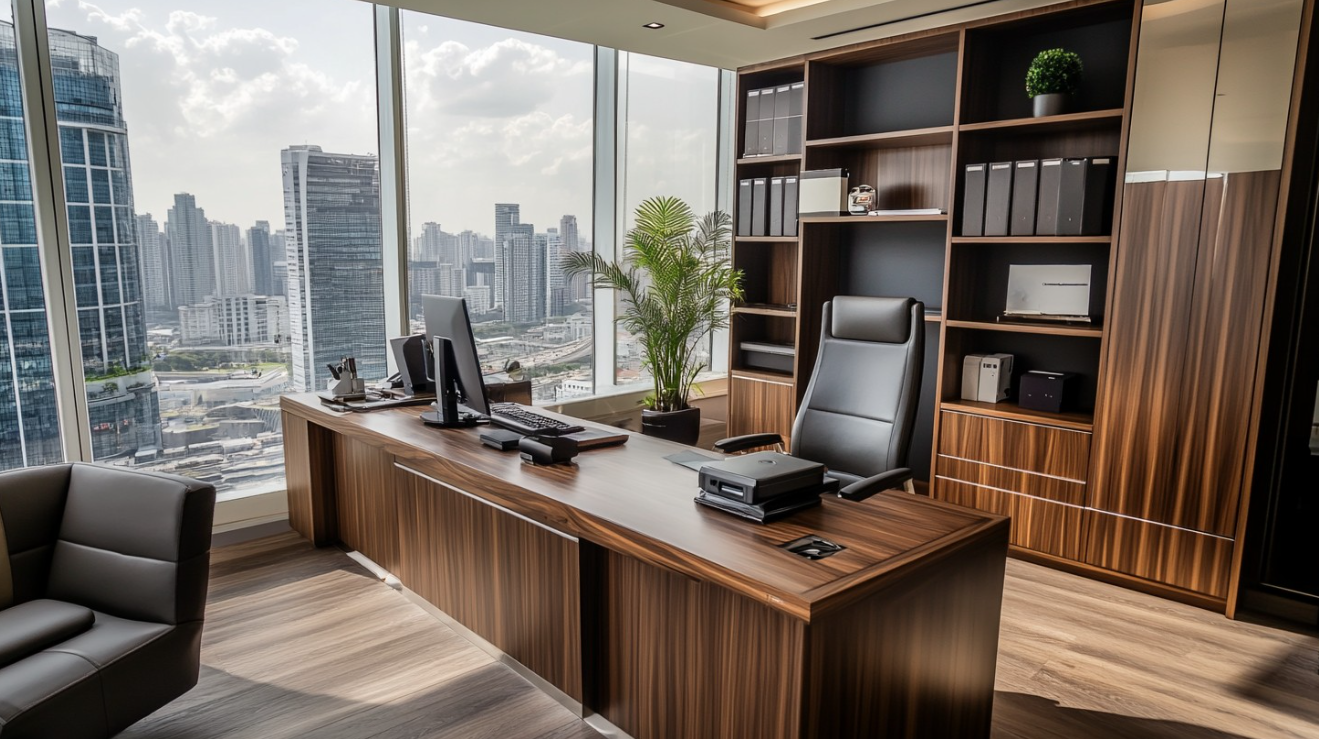
A beautiful desk is useless if it is covered in clutter. This is where the office desk with storage becomes essential for high-level management.
Executive desks often come as part of a suite or set. Instead of relying solely on drawers built into the main desk, many top-tier options include:
Side Credenzas: A secondary unit that runs perpendicular to the main desk, creating an L-shape.
Mobile Pedestals: Small filing cabinets on wheels that can be moved as needed.
Hutches: Shelving units that sit on top of the credenza for displaying awards or books.
Choosing a desk with integrated storage ensures that confidential documents are secured and your workspace remains pristine for impromptu meetings.
To help you decide, here is a breakdown of the most popular executive desk configurations and who they are best suited for.
Desk Configuration | Key Features | Best For | Storage Capacity |
|---|---|---|---|
L-Shaped Executive | Provides two work surfaces; efficient use of corners. | Multi-taskers who need a computer screen on one side and paperwork on the other. | High (usually includes side cabinets) |
U-Shaped Executive | Wraps around the user; maximum surface area. | Executives who need space for meetings, printers, and extensive files within arm's reach. | Very High |
Straight Desk (Double Pedestal) | Classic rectangular shape; symmetrical drawers. | Formal meetings across the desk; traditional office layouts. | Medium |
Standing/Height Adjustable | Motorized lift mechanism; health-focused. | Active professionals concerned with ergonomics and long hours. | Low (often requires separate storage units) |
The lifespan and look of your desk depend heavily on what it is made of.
Solid Wood: The most expensive and durable option, but heavy and sensitive to humidity.
MDF with Veneer: A popular choice for executive furniture. It offers the look and feel of real wood at a more accessible price point and is less prone to warping.
Laminate: Highly durable and resistant to scratches and stains. Great for high-traffic areas.
Metal and Glass: Common in modern designs, offering a distinct industrial or futuristic look.
Here are answers to the most common questions buyers have when selecting executive furniture.
You should measure your room carefully. A standard executive desk is often 60 to 72 inches wide. However, you need to account for chair clearance. Allow at least 42 inches behind the desk for your chair to move freely. If you are choosing a U-shaped desk or adding a credenza, ensure you still have clear pathways for guests to enter the room.
Health experts suggest that alternating between sitting and standing reduces back pain and improves focus. If you prefer the look of a traditional executive desk but want health benefits, look for hybrid models. Many manufacturers now create "executive" height-adjustable desks that hide the lifting mechanism inside a wood-veneer shell, giving you the best of both worlds.
Consistency is key. If you buy a mahogany veneer desk, your bookshelves and conference table should match. Buying from a dedicated manufacturer often allows you to purchase a full suite—including the desk, filing cabinets, and meeting tables—ensuring the wood grains and finishes match perfectly.
When outfitting your office, the quality of manufacturing matters. You want furniture that withstands daily use while maintaining its finish.
For businesses looking for a wide range of options, Guangdong Wohao Furniture Co.,LTD offers comprehensive solutions. From MDF veneer executive desks to modern workstations and ergonomic seating, they provide commercial-grade furniture designed for durability and style. Whether you need a single statement piece for a CEO's office or are outfitting an entire corporate headquarters, choosing a specialist manufacturer ensures you get professional guidance and high-quality materials.
The best executive desk is one that balances your aesthetic preference with the practical needs of your workday. By prioritizing surface space, storage solutions, and material quality, you can create an office that commands respect and enhances your success.